About Juki Flatlock Sewing Machine
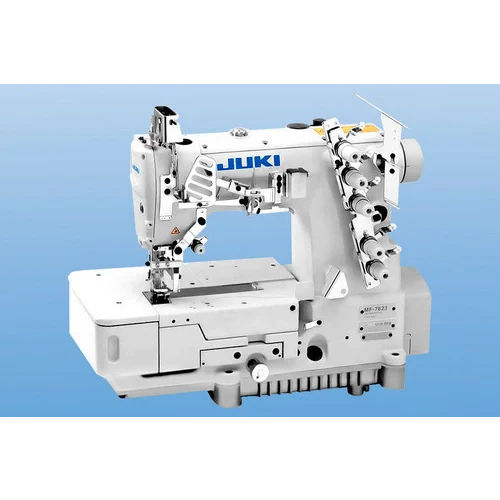
Juki Flatlock Sewing Machine is designed specifically for flatlock stitching, a technique used to create strong, flexible, and decorative seams. It is specialized for creating flatlock stitches, which are commonly used in sportswear, activewear, knitwear, and other garments where a flat seam is desired. These machines often feature a differential feed mechanism, which allows for precise control over the feeding of fabric layers, ensuring smooth and even seams, even with stretchy or difficult-to-handle fabrics. They are built for speed, enabling efficient production in manufacturing settings. Juki Flatlock Sewing Machine is highly regarded for its quality construction, precision stitching, and ability to handle a wide range of fabrics and sewing tasks.
Precision Stitching Meets Industrial DemandsThe Juki Flatlock Sewing Machine excels in the production of high-performance sportswear and underwear. Its flatlock stitch formation guarantees strong, flat seams, ensuring both comfort and durability in garments. With an automatic lubrication system and efficient thread handling, its built to withstand continuous operation in busy manufacturing settings.
Engineered for Operator EfficiencyFeaturing an automatic operating method and an ergonomic flat-bed design, this machine supports productivity while minimizing fatigue. Its low-vibration, low-noise engineering creates a comfortable workspace, even during long hours. The differential feed mechanism prevents fabric puckering or stretching, delivering consistently professional results on medium to heavy textiles.
FAQs of Juki Flatlock Sewing Machine:
Q: How does the automatic lubrication system benefit the Juki Flatlock Sewing Machine?
A: The automatic lubrication system keeps all internal components properly oiled during operation, reducing maintenance needs and prolonging machine life. This ensures smooth and continuous stitching, essential in industrial garment production environments.
Q: What types of garments are best suited for this flatlock sewing machine?
A: This machine is particularly well-suited for industrial production of sportswear and underwear, thanks to its flatlock stitch formation, which provides strong, flat seams ideal for stretchy or fitted garments.
Q: When should I consider adjusting the stitch width or length on this machine?
A: You should adjust the stitch width (3.2mm to 6.4mm) and length (1.0mm to 4.0mm) based on the type of fabric and the required seam finish. For thicker fabrics or for a wider, more prominent seam, use a wider stitch. Shorter stitches are generally used for finer fabrics or detailed work.
Q: Where can I purchase or service the Juki Flatlock Sewing Machine in India?
A: This machine is available through authorized distributors, manufacturers, service providers, suppliers, and traders throughout India. After-sales service and warranty support are also provided by these partners.
Q: What is the process for threading the Juki 3/4 Thread Flatlock Sewing Machine?
A: Threading involves following the designated threading paths as outlined in the user manual, ensuring each of the 3 or 4 threads is correctly passed through tension discs, guides, and the UY128GAS needles. Proper threading is essential for consistent flatlock stitching.
Q: How does the differential feed mechanism contribute to better stitching?
A: The differential feed mechanism allows independent adjustment of the front and rear feed dogs, preventing fabric stretching or puckering. This is especially useful when sewing stretchy or layered textiles, ensuring smooth, even seams.
Q: What are the advantages of the flat-bed design and low-noise operation in an industrial environment?
A: The flat-bed design makes fabric handling easier and more stable, which is especially useful for larger or bulky items. Low-noise, low-vibration operation creates a more comfortable and less fatiguing work environment for operators during extended production runs.




 Send Inquiry


 Send Inquiry
 Send Inquiry
 Send SMS
 Call Me Free